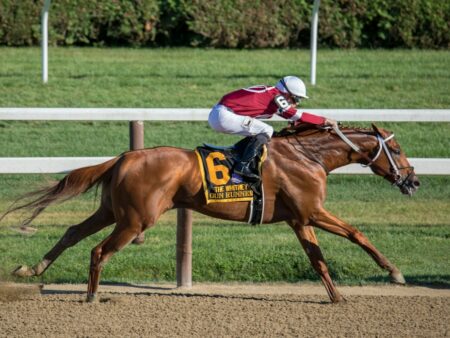

What Is an Each-Way Bet, Exactly?
An each-way bet is really two separate bets rolled into one slip. Half the stake backs your selection to win outright, and the other half backs the same selection to place — finish second, third, or further down the field, depending on how many places the market pays. If your pick wins, both halves return; if it only places, only the place half pays out; if it finishes outside the places, both halves lose.
This structure is most common in events with a large, unpredictable field — horse racing being the clearest example — but the same win-plus-place logic applies to any market where a bookmaker offers place terms alongside the win price, from golf tournaments to multi-runner novelty markets.
Step 1: Work Out the Win Part of the Bet
The win half is the easy part — it behaves exactly like a standard win-only bet at the quoted odds. A $10 each-way bet splits into a $5 win bet and a $5 place bet. If the selection wins, the $5 win bet pays out at full odds, and the $5 place bet also pays out, since winning counts as placing too.
Where each-way betting differs from a plain win bet is that half the total stake is committed to a lower-paying outcome from the start. That lowers the overall return if the selection wins outright, but it protects part of the stake if the selection merely places.
Step 2: Work Out the Place Part — Understanding the Place Fraction
The place half does not pay at the full win odds. Instead, the win odds are reduced by a fraction — commonly 1/4 or 1/5, though 1/2 and 1/3 are also used depending on the event. According to Wikipedia’s documented entry on each-way betting, this fraction is applied directly to the win odds to produce the place odds, event by event.
A worked example makes the mechanic concrete: a selection priced at 10/1 to win, with place terms of 1/5, pays 10/5 — or 2/1 — on the place part if it only places rather than wins. Shorten the fraction to 1/4 on that same 10/1 price and the place part instead pays 10/4, or 5/2 — a noticeably better return for the exact same finishing position. Generally speaking, 1/4 place terms favor the bettor more than 1/5, since a larger fraction converts into a bigger place payout.
Step 3: Check How Many Places Are Actually Paid
The fraction only tells you the price — it says nothing about how many finishing positions actually count as a “place.” That depends almost entirely on the number of runners, and it’s the detail most overlooked before staking:
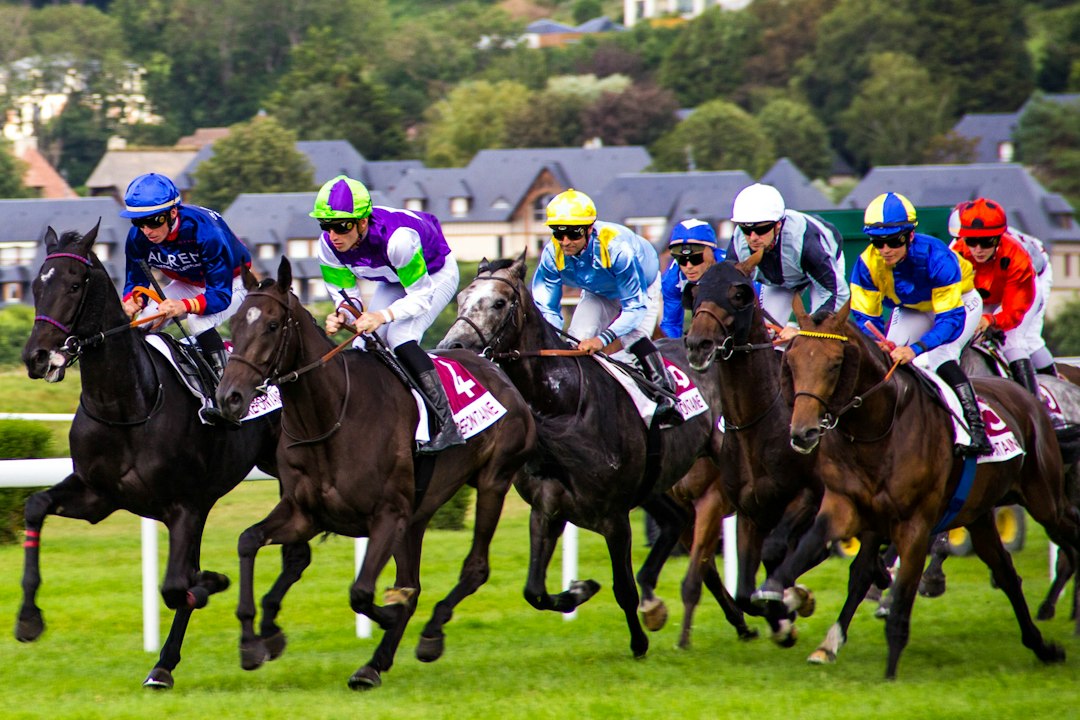
- Very small fields (roughly two to four runners) are often win-only — no each-way terms are offered at all.
- Fields of around five to seven runners typically pay two places, usually at a 1/4 fraction.
- Fields of eight runners or more commonly extend to three paid places, often at a 1/5 fraction.
- Larger fields of twelve runners or more can pay three or four places, sometimes at the more generous 1/4 fraction.
These bands reflect common industry convention rather than a fixed universal rule — individual bookmakers and specific events can set their own place terms, and some run temporary promotions adding extra paid places for marquee races. Always check the place terms quoted for that specific market before staking, not just the fraction on its own.

Step 4: Account for Non-Runners and Dead Heats Before the Event Starts
Place terms are calculated on the number of runners that actually start, not the number originally declared. A field advertised at eight runners that loses one to a late withdrawal becomes a seven-runner race for place-term purposes — which can quietly drop the number of paid places from three to two between the time the bet was placed and the time the event actually starts.
Dead heats add a second layer: when two selections tie for the same finishing position, the place portion of the stake is typically paid at a reduced fraction, split between the tied selections, rather than as a full place payout to each. Neither of these adjustments touches the win part of the bet — only the place calculation.
Step 5: Decide Whether the Each-Way Bet Is Worth Placing
An each-way bet is rarely the highest-value way to back a strong favorite — committing half the stake to a place bet on a selection that’s likely to win anyway caps the overall return. It tends to make more sense on a longer-priced selection in a bigger field, where the place part offers realistic insurance against just missing out on the win.
Before staking, it helps to ask the same three questions every time: what is the win price, what fraction applies to the place part, and how many places does this specific field size pay? Run those numbers against a straight win bet and a straight place bet before deciding which structure actually suits the selection — the same comparison logic used when weighing a draw no bet wager against double chance, where the “safer but smaller” trade-off follows a similar pattern. If the field size or line itself is the uncertain part of the decision, the reasoning behind how a bookmaker sets its over/under totals line is worth reading too, since both markets hinge on comparing a fixed line against the practical, rather than hoped-for, outcome.
George Mahulet has covered African sports betting and iGaming markets for over six years, focusing on how licensing, mobile money integration, and bonus terms actually play out for bettors in Nigeria, Kenya, Tanzania, and South Africa. Before joining Best10Betting, he worked as a data analyst for a Lagos-based fintech tracking mobile payment adoption — experience that shapes his focus on the payment and licensing details other betting content tends to skip. He verifies every bookmaker’s regulatory status directly against the relevant national gaming board before publishing a review, and updates existing reviews whenever bonus terms or licensing status change rather than leaving them static after launch.